Core Services
Verruca Assessment & Treatment
At Feet and Motion, we know verruca can be a pain
Not sure which verruca treatment you need? You don’t need to be.
Your Verruca Treatment Journey
1. Assessment
We examine the lesion and consider factors including its appearance, size, location, duration and previous treatment.
Importantly, we also assess the patient, not just the verruca. Age, skin condition, medical history, lifestyle, and conditions such as diabetes can influence which treatments are appropriate. A treatment suitable for a healthy adult may not be appropriate for a young child or somebody whose skin requires greater care.
2. Discuss your options
The podiatrist will explain which treatment options are clinically appropriate, what they involve, their advantages and disadvantages, likely treatment course, and relevant costs.
Sometimes the appropriate recommendation may also be not to treat the verruca.
3. Treatment
You don't need to choose your treatment before you book.
Where appropriate, treatment can start during the first Verruca Assessment & Treatment appointment. Your podiatrist will then make a plan with you for any further treatment or review appointments required.
Verruca treatment options
There isn't one treatment that's right for every verruca or every patient
Verruca Treatment available at Feet & Motion:
Professional topical verruca treatment
This is different from simply purchasing an over-the-counter verruca product. Our podiatrists can access professional preparations that differ from standard pharmacy treatments. We assess and prepare the lesion where required, select an appropriate topical treatment according to the individual patient and verruca, and monitor the response as treatment progresses. Topical treatments are applied at regular treatment sessions.
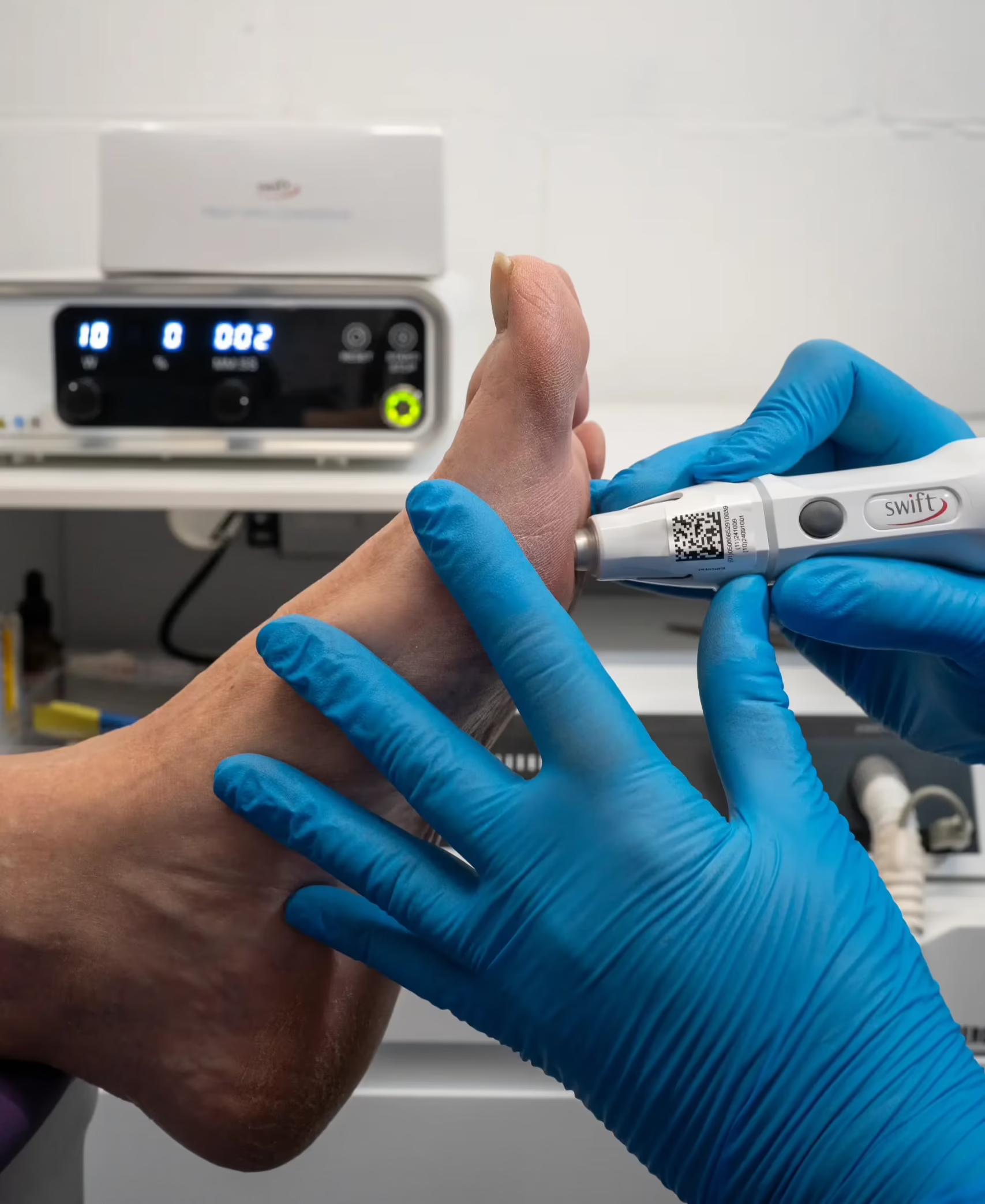
Swift microwave therapy
Swift uses controlled microwave energy as part of the treatment of verruca and may be appropriate for some patients with persistent or troublesome lesions. It’s quick, does not require local anaesthetic, and there are no dressings required after the procedure so you can just get on with your day. Read more about Swift microwave therapy here.
Faulkner’s needling
Verruca needling is performed under local anaesthetic. The Faulkner’s needling method works by using a sterile needle to create multiple controlled punctures to the affected area of skin, stimulating an effective immune response to the virus.
FAQS
Frequently Asked Questions
Do all verruca need treatment?
- painful or affecting walking, sport or everyday activities
- persistent over months or years
- spreading or increasing in number
- failing to resolve with home treatment
- causing concern
- if you’re not sure whether it’s definitely a verruca
Why have your verruca professionally assessed?
Verruca treatment isn’t one-size-fits-all.
The most appropriate treatment can depend on the size, location and number of lesions, how long they have been present and what has already been tried. But it can also depend on the person being treated.
Age, skin condition, lifestyle, medical history, and conditions such as diabetes can influence which treatments are appropriate. Treatments suitable for a healthy adult may not be suitable for a young child or someone whose skin requires greater care.
Professional verruca treatment therefore isn’t simply about applying a product. It involves assessment, clinical judgement, appropriate treatment selection, lesion preparation where required, and monitoring of the response.
Do you offer cryotherapy or ‘freeze’ verruca?
No. Although cryotherapy (freezing with liquid nitrogen) is commonly associated with wart and verruca treatment, we have chosen not to offer it for plantar verruca.
This is an evidence-based decision. Research comparing liquid-nitrogen cryotherapy with high-strength salicylic acid for plantar verruca has not shown cryotherapy to produce better clearance rates. Cryotherapy can also be painful and may cause blistering and permanent damage to the surrounding skin.
As we can offer professional topical treatments alongside other treatment options, we do not believe that routinely exposing patients to a more painful treatment is justified when the evidence has not demonstrated a clear improvement in outcomes.
If you’re unsure which treatment is appropriate for your verruca, you don’t need to decide before booking. Your podiatrist will assess both you and the lesion and discuss the treatment options that are appropriate for you.
What does verruca treatment cost?
Evidence Base
According to the NICE (National Institute for Health and Care Excellence) guidelines, verrucae can be treated safely using several different evidence-based approaches in secondary care. We can talk you through these options and discuss which might be the best option for you, to ensure your treatment plan is tailored and based on proven methods — not guesswork.
Topical Nitric–Zinc Complex Solution (NZCS) ‘Verrutop’
Research on the use of topical Nitric–Zinc Complex Solution to treat warts in children showed highly effective results. The study reported complete resolution in 83.9% of treated warts, with 87.5% of periungual and 71% of palmoplantar warts fully clearing after an average of just six treatment sessions. For you this means that your child’s verrucae can be treated simply and effectively with a well-tolerated, non-invasive option.
Faulkner’s Needling
In a study of 45 patients, Faulkner’s needling method was used to treat verrucae on the feet, resulting in complete resolution in 69% of cases within just eight weeks. This technique involves a single procedure that stimulates the immune system to fight the virus causing the wart. What this means for you is that there’s an alternative treatment available that can help clear stubborn verrucae efficiently, often after just one session.
Swift Therapy
Published research on Swift therapy shows strong success in treating verrucae by stimulating your immune system to clear the virus naturally. For you, this means a clean, quick, and effective solution without complicated wound aftercare.
Read the research here.