Digital Gait Analysis
Understand how you move. Understand what it means.
The way your feet, ankles, knees, hips and pelvis work together can influence how forces move through your body when you walk, run or take part in sport. Sometimes those movement patterns are relevant to pain or injury. Sometimes they aren’t.
At Feet & Motion, our Digital Gait Analysis combines advanced movement technology with detailed clinical assessment to help us build a clearer, objective picture of how you move, how you interact with the ground, and what those findings actually mean for you.
More than a gait analysis
That’s why our approach brings together three complementary elements:
How You Move
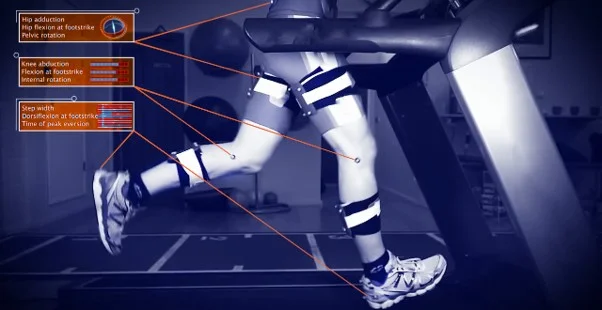
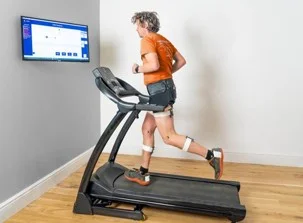
Run3D allows us to objectively measure movement through your pelvis, hips, knees and ankles while you walk or run.
Rather than relying solely on what the eye can see, we can examine movement in three dimensions and identify patterns, asymmetries and differences that may be relevant to your symptoms, injury history or performance.
How You Interact With the Ground
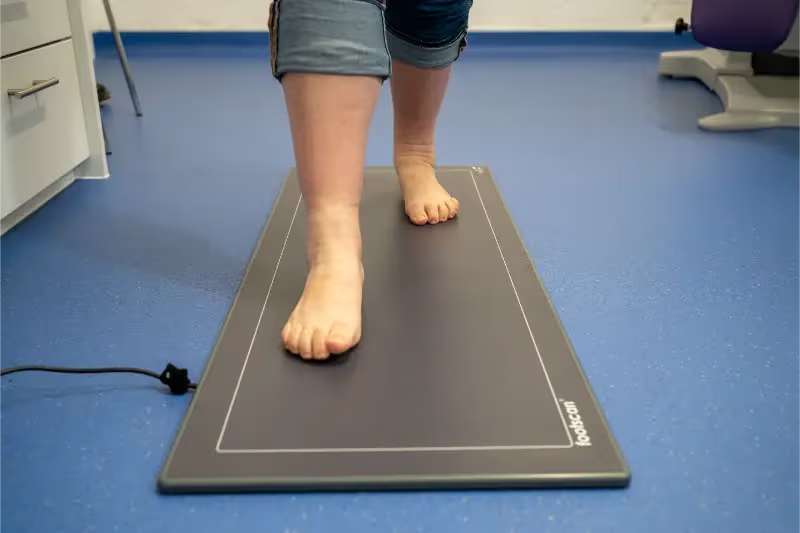
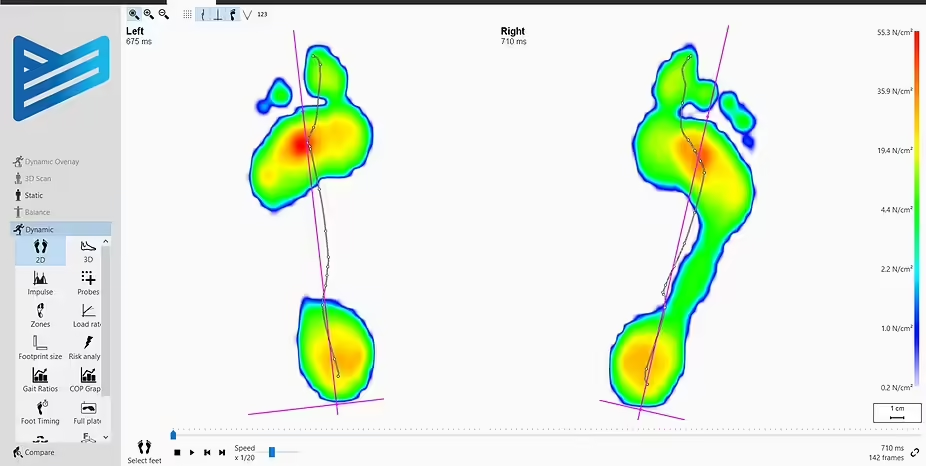
Footscan measures what happens underneath your feet as they interact with the ground.
It allows us to examine how pressure and load are distributed during standing, walking or running, providing information that cannot reliably be identified by observation alone.
This adds another layer to the picture: not only how your body is moving, but what is happening where your body meets the ground.
What It Means
Neither Run3D nor Footscan diagnoses the cause of your problem.
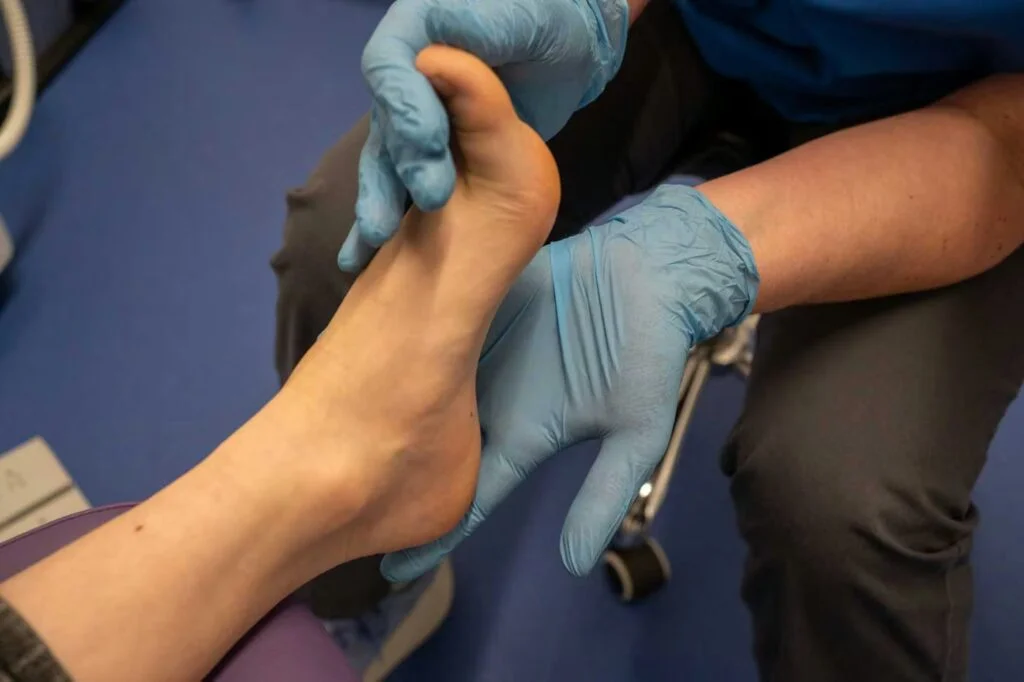
Your clinician considers the data alongside your symptoms, medical and injury history, activity or training demands, footwear and a detailed physical assessment. We may examine areas such as joint movement, strength, flexibility and functional movement.
We then bring all of that information together to determine which findings are relevant, which aren’t, and what, if anything, needs to change.
Why might Digital Gait Analysis help?
Digital Gait Analysis may be useful if you:
- have pain or an injury that keeps returning
- experience symptoms specifically when walking, running or exercising
- have tried treatment before but the problem hasn't fully resolved
- want to understand whether movement patterns may be contributing to your symptoms
- are returning to activity or sport following injury
- are increasing your training volume or intensity
- want objective information to help tailor your training
- want to explore movement and performance before an injury develops
The aim is to identify what matters for you.
From information to an individual plan
The purpose of gathering objective movement data is to help us make better clinical decisions.
Depending on what we find, your recommendations might include:
Targeted rehabilitation
Exercises designed around the strength, mobility or movement-control findings relevant to you.
Gait retraining
Where appropriate, we may explore changes to walking or running technique and objectively assess their effect.
Strength and conditioning
Using the findings to help make training more specific to your individual movement profile.
Footwear advice
Helping you choose footwear appropriate for your biomechanics, activity and goals.
Orthotics or insoles
Where they are clinically indicated, pressure and movement data can help inform an individual orthotic prescription.
Training or load modification
Sometimes the issue isn't simply how you move, but what you're asking your body to do and how quickly you're asking it to adapt.
And sometimes our assessment tells us that something doesn't need changing at all.
Measure. Intervene. Remeasure.
Where appropriate, assessment can be repeated following rehabilitation, gait retraining or another intervention so that we can compare the results.
That means we’re not relying solely on whether something looks different. We can ask: Has the movement pattern we targeted actually changed? Has symmetry improved? Has the way you load the ground changed? And, most importantly, does that change correspond with how you feel and what you can do? Objective data gives us another way to measure progress, alongside your symptoms, function and goals.
- Has the movement pattern we targeted actually changed?
- Has symmetry improved?
- Has the way you load the ground changed?
- And, most importantly, does that change correspond with how you feel and what you can do?
Not just for runners
Digital gait analysis can be used to assess both walking and running, and the information can be valuable for people with a wide range of lower-limb and movement-related problems.
You might be trying to understand persistent pain during everyday walking, struggling with an injury that appears every time you increase your mileage, returning to sport after rehabilitation, or looking for ways to make your training more individual.
The question we’re trying to answer is the same:
How are you moving, and is any part of that relevant to what you’re experiencing or trying to achieve?
Injury rehabilitation or injury prevention?
For someone already experiencing pain or injury, Digital Gait Analysis can help us investigate movement factors that may be relevant and develop a more targeted rehabilitation plan.
For someone who is currently pain-free, objective movement assessment can highlight individual patterns that may be worth considering when planning strength, conditioning or training.
It isn’t a crystal ball and it can’t predict whether you will become injured.
What it can do is give you and your clinician better information on which to base your decisions.
Is Digital Gait Analysis right for me?
For some problems, a standard clinical biomechanical assessment gives us all the information we need. For more persistent or complex problems, or where detailed objective movement data would genuinely influence what we do next, Digital Gait Analysis may add valuable information.
If you’re unsure which level of assessment is appropriate, you don’t need to work it out yourself.
Our team can help guide you to the right assessment for your problem, activity and goals.